Foglet
also known as: foglets
Also available in: Polski · Čeština · Deutsch
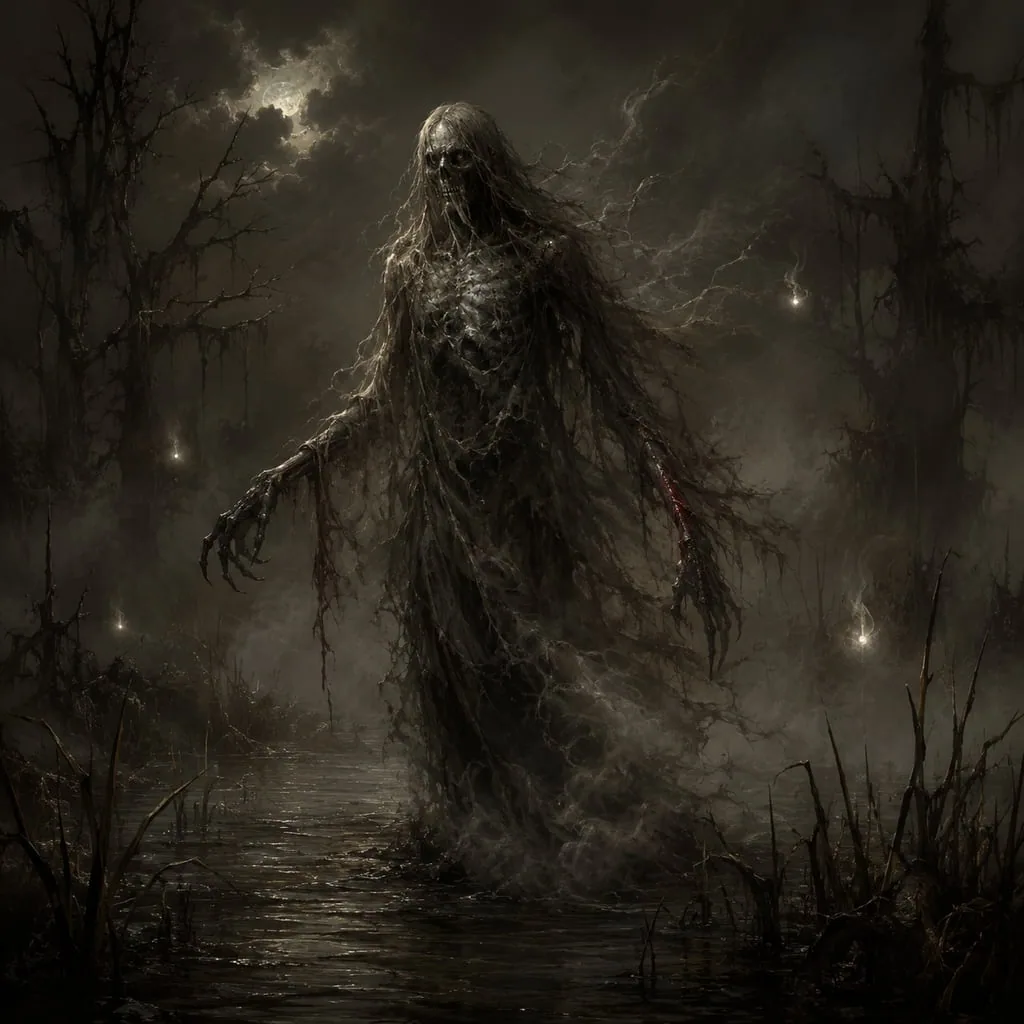
What is a foglet
The foglet is a monster that hunts in the fog: it lures travellers with a pale light, splits them up, makes them lose the path, and then leads them towards cliffs and bogs or attacks from hiding. In Andrzej Sapkowski’s books it appears only by name - in the collection “The Last Wish” and in “Time of Contempt”. Its appearance, habits and how to fight it are described only in the game “The Witcher 3: Wild Hunt”, which classes foglets as necrophages.
The foglet in the books
In “The Last Wish” the foglet ends up in a list of creatures that live only to kill - alongside the manticore, the wyvern, the ilyocoris, the striga and the kikimore. That sentence tells us only that it is a predator a witcher might take a contract on.
“Time of Contempt” has a second, more concrete mention. Geralt counts the money from his latest contracts: a hundred and fifty crowns for a manticore, fifty for a werewolf and the same for a foglet, which he killed on the orders of the headman of a village near Carreras. This rate shows that for a witcher the foglet was an ordinary, moderately paid contract - three times cheaper than a manticore.
That is where the canon ends. Sapkowski does not describe what a foglet looks like or how to fight one, and there is no point in filling in those details for him. Everything below comes from the games.
Appearance and habits in the games
The bestiary of “The Witcher 3” presents the foglet as a thin humanoid with powerful arms and claws sharper than Zerrikanian daggers. Even so, its main weapon is not strength but deception. Foglets live in groups wherever thick fog is easy to come by: in swamps, mountain passes, by rivers and lakes. When there is no fog, they summon it themselves - air thickening quickly on a windless day is a sign that a foglet is near and getting ready to attack.
In the fog the monster separates travellers, hides paths and muffles sounds. Its body gives off a pale light, which it uses like a ghostly firefly to lead the lost to its lair. Often it does not need to attack at all: it drives its victim into a quagmire and waits for it to drown. The journal quotes a swamp guide’s advice: if night catches you on the marshes, do not move until dawn and never follow a light in the fog. Older and stronger individuals are said to create illusions rivalling those of human mages.
Foglets in “The Witcher 3”
- Wild Hunt: foglets are found in Velen, near Novigrad, on Skellige and around Kaer Morhen. The strongest of them, an ancient foglet called Ignis Fatuus, lives in a cave in Crookback Bog and is the target of the contract “Swamp Thing”. The hidden traces leading to its lair are revealed by the Eye of Nehaleni. The bestiary states that such foglets live for over two hundred years and grow ever more dangerous with age.
- Isle of Mists: on the island where Geralt finds Ciri live brownish foglets, more ghostly than corporeal.
- Hearts of Stone and Blood and Wine: foglets return in both expansions, including in Toussaint.
Ignis Fatuus is the Latin term for a will-o’-the-wisp. It is a good clue to where the developers got the idea for the foglet: in folk beliefs will-o’-the-wisps led wanderers astray in the marshes until they drowned.
How to fight a foglet
Hidden in the fog, a foglet becomes intangible and cannot be harmed. You have to watch for the slightest shimmer of the air or movement of the grass that betrays its position. The Aard Sign forces it to take on a tangible form, and Yrden works in a similar way. The Moon Dust bomb prevents it from vanishing, and Necrophage oil increases the damage dealt. The Quen Sign protects against a sudden blow from the fog. A foglet’s illusions inflict real wounds, but they dissipate when hit.
Frequently asked questions
Does the foglet appear in Sapkowski’s books? Yes, but only by name: in the list of monsters in “The Last Wish” and in “Time of Contempt”, where Geralt gets fifty crowns for a foglet.
What oil to use against foglets in The Witcher 3? Necrophage oil. Add the Moon Dust bomb, the Aard or Yrden Sign, and Quen for protection.
What is Ignis Fatuus in The Witcher 3? An ancient foglet from a cave in Crookback Bog, the target of the contract “Swamp Thing”.
Why can’t you see a foglet? Because in the fog it becomes intangible. Aard or Moon Dust force it to show itself.
