Ekimmara
also known as: ekimmaras, ekimma
Also available in: Polski · Čeština · Deutsch
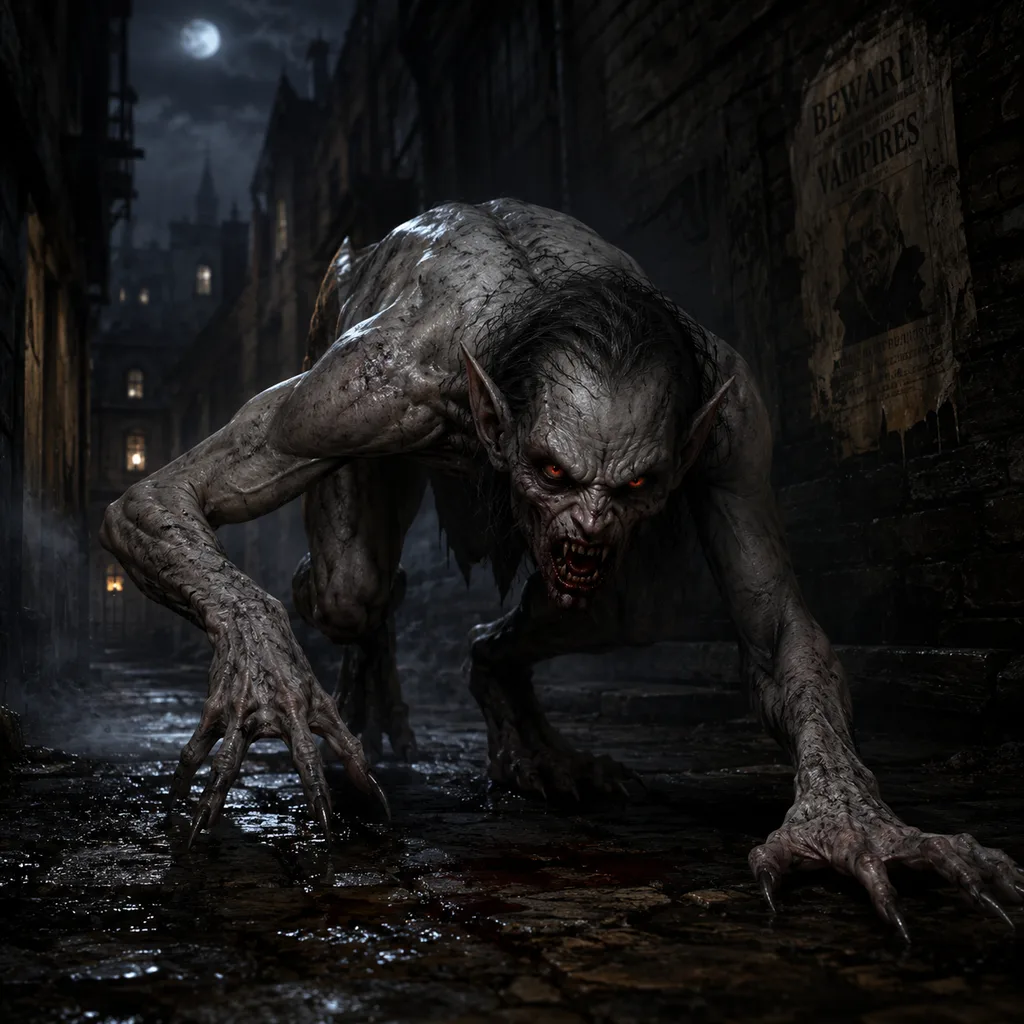
What is an ekimmara
The ekimmara, called ekimma in the Polish books and in the Polish version of “The Witcher 3”, is a mindless vampire from the world of The Witcher that does not drink blood delicately but rips its victim apart with its claws. Andrzej Sapkowski mentions only its name, in “Baptism of Fire”. Its appearance, habits and fighting style were described only by the game “The Witcher 3: Wild Hunt” (2015), where the ekimmara is a lower vampire - clearly more dangerous than the fleder, but just as devoid of reason. The form “ekimmara” comes from the English version of the game.
The name has a real pedigree: in the beliefs of ancient Mesopotamia the ekimmu (edimmu) was the ghost of a dead person who had not been properly buried - almost incorporeal, draining the life out of sleepers. The world of The Witcher borrowed the word, not the mythology.
In the books
The ekimma appears once, in “Baptism of Fire”, in a conversation about vampires in which the barber-surgeon Emiel Regis takes part - before Geralt’s company learns that it is talking to a higher vampire. Regis explains that higher vampires never mutilate their victims, and neither do the alp, the katakan, the mula, the bruxa or the nosferat. Tearing bodies apart is the domain of the fleder and the ekimma. He adds that neither of these two species is found in the climate of the North.
That is the whole of the canonical knowledge: the ekimma is a brutal predator, animal-like in the way it kills, and foreign to the Northern Kingdoms. The label “lower vampire” was given to it only by the games.
In “The Witcher 3”
In “Wild Hunt” and in the “Hearts of Stone” and “Blood and Wine” expansions, ekimmaras live in caves and ruins in Velen, Novigrad and Skellige, usually in packs, though loners also occur. The game’s bestiary debunks the legends: an ekimmara is not an undead human but a creature that came into the world after the Conjunction of the Spheres, and garlic, holy water and religious symbols do nothing to it. Nor does it look like the pale aristocrat of the ballads - it looks like an overgrown, wingless bat. It slashes its victims with long claws and laps the blood up from the ground.
The ekimmara stands out for its cruelty and speed - it can land a flurry of blows that tears even good Mahakaman armor to shreds. It also regenerates wounds quickly and can turn invisible. The bestiary therefore advises not to try to outlast it or wait for it to bleed out, but to kill it as fast as possible with a silver sword and burn the body. It is weakest at high noon.
The most important ways to deal with an ekimmara in the game:
- Vampire oil on a silver sword,
- the Black Blood potion - an ekimmara that wounds the witcher and drinks his blood takes damage itself,
- a Devil’s Puffball bomb combined with the Igni Sign,
- a Moon Dust bomb, which keeps it from vanishing,
- the Quen Sign, because the ekimmara’s claws cannot be parried and dodging can be unreliable against such speed.
Known ekimmaras from the game
The most famous is Sarasti - an ancient, exceptionally powerful ekimmara from the quest “Contract: The Mystery of the Byways Murders” in Velen. It was awakened by villagers who went treasure hunting in elven ruins on their own; the beast killed some of the inhabitants and a passing Nilfgaardian patrol. The name most likely alludes to the vampire Jukka Sarasti from Peter Watts’s novel “Blindsight”.
Another important ekimmara appears in the quest “Following the Thread” in Novigrad. Geralt tracks the monster near the docks and in its lair runs into Lambert, who is hunting the same beast - although, as it turns out, he has his own purpose: he is looking for the murderers of a friend, a witcher of the School of the Cat.
Frequently asked questions
Ekimma or ekimmara? Both names refer to the same vampire. The Polish books and the Polish version of “The Witcher 3” use “ekimma”; “ekimmara” is the form from the English edition of the game.
Where to find an ekimmara in The Witcher 3? In caves and ruins in Velen, Novigrad and Skellige, usually in packs. The two most important ones are tied to quests: Sarasti from “Contract: The Mystery of the Byways Murders” in Velen and the ekimmara from “Following the Thread” near the Novigrad docks.
Does the ekimmara appear in Sapkowski’s books? Only as a name. In “Baptism of Fire” Regis lists it alongside the fleder as a vampire that tears its victims apart and notes that it is not found in the North.
How to beat an ekimmara in The Witcher 3? With a silver sword coated in Vampire oil, ideally under the effect of Black Blood. Quen, Igni with Devil’s Puffball and Moon Dust against invisibility also help.
How does an ekimmara differ from a katakan? In the games the katakan is bigger, stronger and has the rudiments of self-awareness, while the ekimmara is a pure predator without reason.
