Warg
also known as: wargs
Also available in: Polski · Čeština · Deutsch
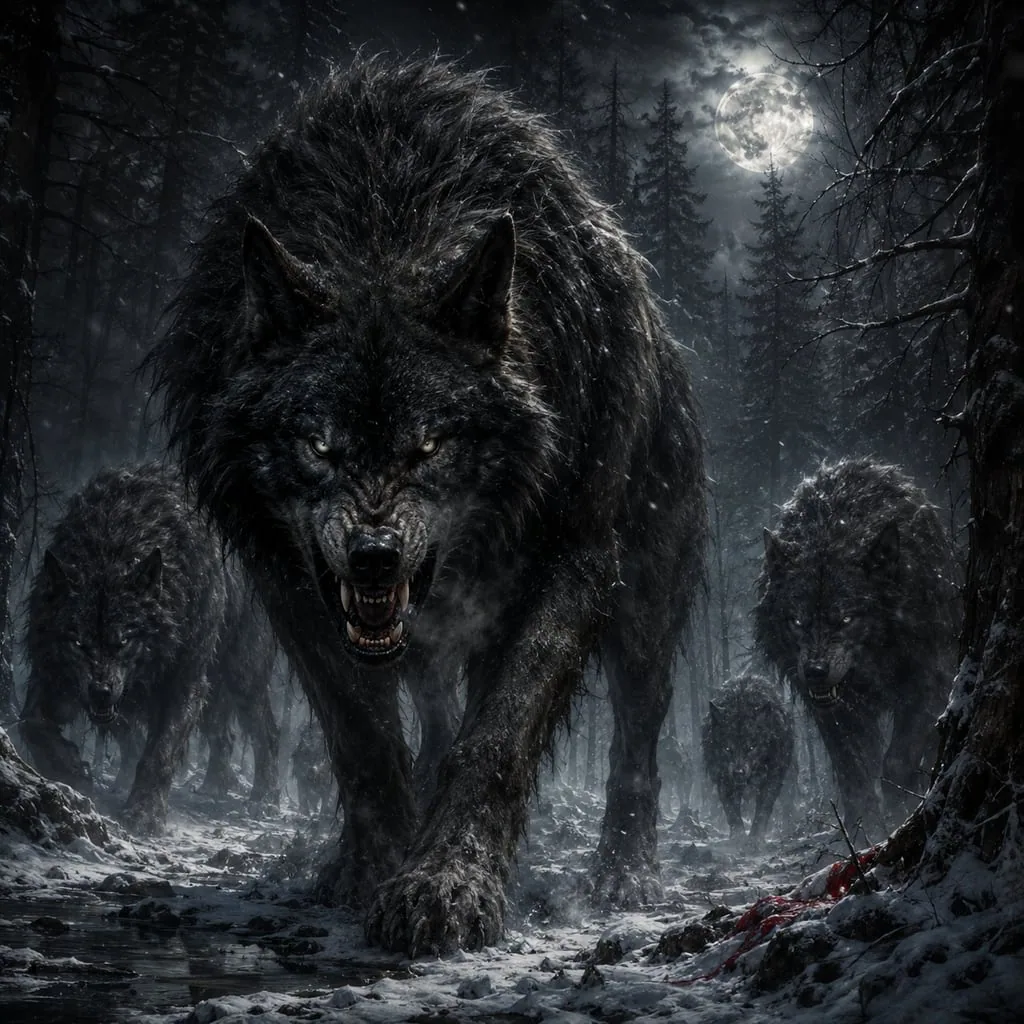
What is a warg
The warg is an exceptionally large and ferocious wolf, an opponent from CD Projekt RED’s games. In “The Witcher 3: Wild Hunt” the bestiary describes wargs as a particularly dangerous, vicious variety of wolf, and in combat a warg usually leads a pack of ordinary wolves. There are no wargs in Andrzej Sapkowski’s books - it is a creature from outside the literary canon, borrowed from the fantasy tradition.
There is nothing magical about a warg. It is not a cursed human like the werewolf, nor a creature from another world like the monsters that came with the Conjunction of the Spheres. It is an animal, only bigger, stronger and more dangerous than the rest of the pack.
Where the name comes from
The word comes from the Old Norse “vargr”, meaning a wolf and at the same time an outlawed exile. In Norse mythology the name was given above all to mythical wolves: Fenrir, and Sköll and Hati, who chase the sun and the moon across the sky. Linguists trace the word back to Proto-Germanic “wargaz”, and its Old English counterpart “wearg” meant an outcast and a criminal. In modern Swedish “varg” simply means wolf.
The word was brought into fantasy by J.R.R. Tolkien: in “The Hobbit” (1937) wargs are great, evil wolves ridden by goblins. In Tolkien they are not ordinary animals - they speak, hold councils and plan raids, so Tom Shippey, a scholar of his work, concluded that the writer combined both old meanings in them: the wolf and the outlawed villain. Since then the warg has been a fixture of fantasy bestiaries - and it was this route, not Slavic folklore or Sapkowski’s prose, that brought it into the Witcher games. In CD Projekt RED’s games, however, it remains an animal, without Tolkien’s intelligence.
The warg cut from the first “Witcher”
The warg was supposed to debut as early as the game “The Witcher” (2007). The game’s official website announced it as a new creature of unknown origin that roams the forests around Vizima and attacks everything it meets, animal or human - it was people who were supposed to have named it the warg. Concept art has survived, but in the end the monster was cut from the game.
The warg in “The Witcher 3”
The warg only made it onto the screen in “The Witcher 3”. It can be found wherever there are wolves: in White Orchard, in Velen, on Skellige and, in the “Blood and Wine” expansion, also in Toussaint. There is usually one warg per pack. It is clearly bigger than the other wolves, hits harder and lasts the longest in a fight.
Wargs have no separate bestiary entry - they share one with wolves, which Geralt can expand by reading the book “Fauna of the Northern Realms, Volume 1”. Alongside wargs it names as especially dangerous the snow-white wolves, now found only in the wild mountains of the Skellige archipelago. It also points out that wolves, though pushed into the wildest backwoods by the monsters of the Conjunction era, still kill careless travellers and hunters. Their strength is cooperation: they hunt in groups, surround their prey and attack from several sides at once. The presence of wolves can also be a warning, because they share hunting grounds with werewolves and leshens, and a leshen can summon a pack to help it.
From a slain warg Geralt collects the same things as from an ordinary wolf: dog tallow, raw meat, wolf’s liver and a hide. Dog tallow and wolf’s liver are also ingredients of Beast oil, which works best against wolves in particular.
How to fight a warg
- Do not let yourself be surrounded - the basic rule with any pack.
- First thin out the ordinary wolves, then focus on the warg.
- Igni sets wolves on fire, and Aard knocks them to the ground, which gives you a moment to finish them off or catch your breath. Yrden slows the attackers down and makes counterattacks easier.
- Beast oil helps. Against wargs, as against all ordinary animals, a steel sword is better than a silver one. The exception is wolves summoned by a leshen - those have to be cut with silver.
- Wolves attack often and from many sides, so parrying alone is not enough. It is worth breaking up their assault with Signs instead of waiting for a chance to counter.
Frequently asked questions
Does the warg appear in the Witcher books? No. It is a monster found only in the games - cut from the first one and present in “The Witcher 3”.
How does a warg differ from a werewolf? A warg is an animal, a big and aggressive variety of wolf. A werewolf is a cursed human who turns into a beast.
What oil to use against wargs in The Witcher 3? Beast oil. The Igni and Aard Signs are useful too.
Where does the name “warg” come from? From the Old Norse “vargr” (wolf, outcast). It was brought into fantasy by Tolkien in “The Hobbit”.
